
01 · The Challenge
The global steel industry is racing — but the map is flawed.
Heavy industry accounts for ~30% of global emissions and steel alone for 8%. Two generations of solutions are on the table. Only one is built for the climate-and-capital reality of the next decade.
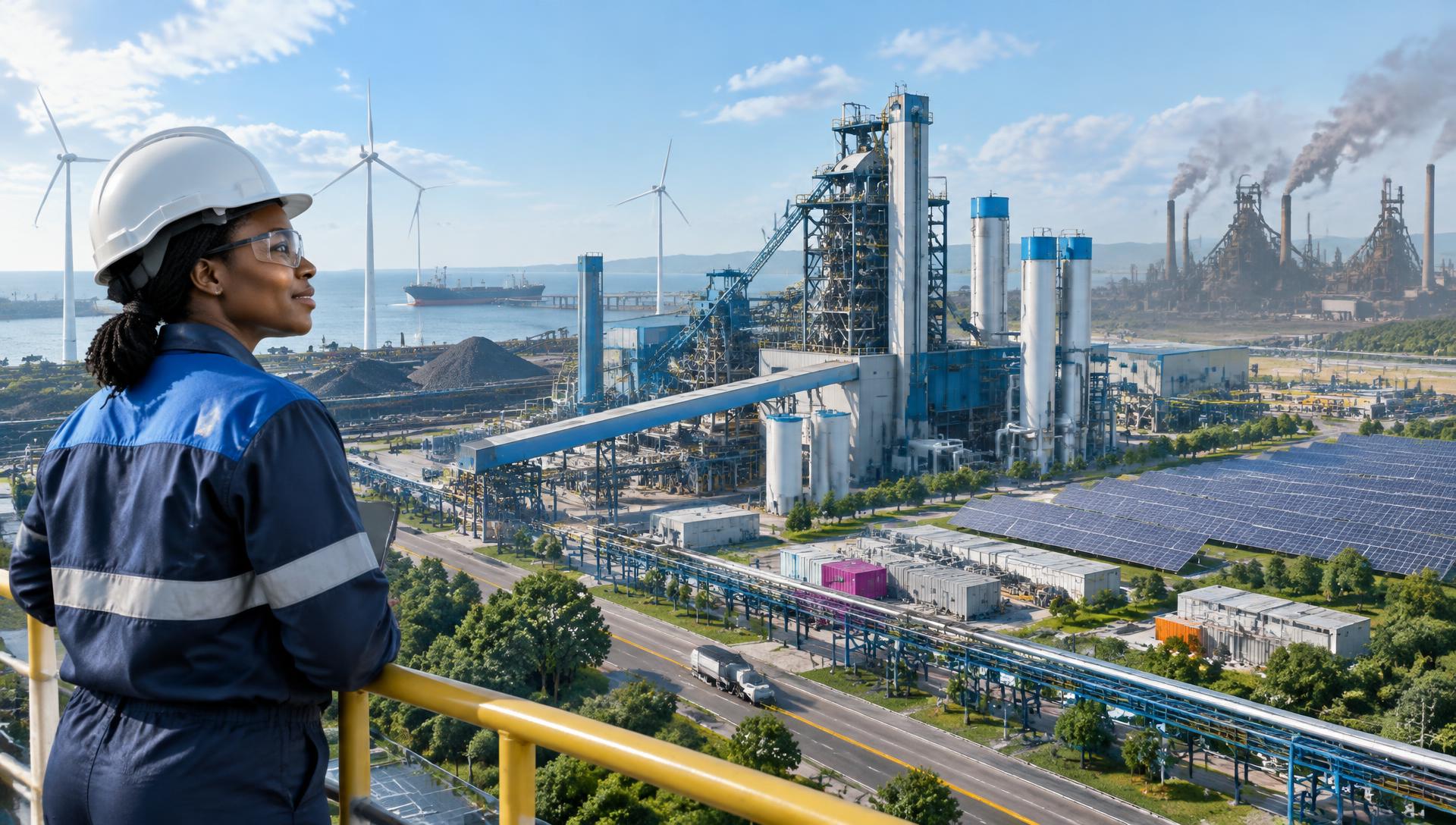
Illustrative project vision
The Past
Traditional Steel
- Energy source
- Coal & fossil grid
- CO₂ per ton
- 2.0 tonnes
- Reductant
- Coke
- Ecosystem
- Fragmented, single-asset
- ESG capital fit
- Un-investable
- Geography
- Historical rust belts
- Technology
- Mature, no innovation
The Transition
Developed Green
- Energy source
- Grid-tied renewables
- CO₂ per ton
- 0.5–1.0 tonnes
- Reductant
- H₂ / Natural gas blend
- Ecosystem
- Retrofitted systems
- ESG capital fit
- $130B absorbed
- Geography
- Sub-optimal (Nordic climate)
- Technology
- Evolving, grid-dependent
The Future
Ghana Green Steel
- Energy source
- Captive tri-source hybrid
- CO₂ per ton
- 0.235 tonnes (88% ↓)
- Reductant
- 100% green hydrogen
- Ecosystem
- Five-pillar integrated
- ESG capital fit
- $35T first-mover
- Geography
- Solar-optimal equatorial
- Technology
- AI-native autonomy
The structural advantage
Why Ghana is not just a location. It's a competitive moat.
5.5 kWh/m²/day
Average solar irradiance on the equatorial belt — among the highest globally.
Solar-Wind-Hydro Hybrid Mega-Complex
A captive 500MW tri-source generation backbone immune to grid instability. Zero marginal cost, 24/7.
Technical specs, layout & rollout